
How children learn here
सीखना, करके देखना
The stages of school as meters, how children usually learn at each one, and what the school will confirm. Nothing here is the school's own claim.
Energy meter: the stages of school
Each meter is waiting for a reading from the school. Tap one to see what that stage usually looks like in Indian schools.
The needle shows where a stage sits on a child's school journey, not a measurement of anything.
Pre-primary usually about 3 to 6 years
Nursery, LKG and UKG in most Indian schools. Children usually learn through play: songs, stories, sorting, drawing, and the first letters and numbers.
- Songs, rhymes and stories
- Drawing, colouring and clay
- First letters, sounds and counting
A general picture of this stage. Whether the school runs it, and the board and medium it uses, are to be confirmed by the school.
Primary usually about 6 to 11 years, Classes 1 to 5
Reading and writing become fluent and numbers start to make sense. Children usually meet simple science and social studies through looking, asking and doing.
- Reading and writing in English and Hindi
- Number sense, tables and shapes
- Looking closely at plants, water and weather
A general picture of this stage. Whether the school runs it, and the board and medium it uses, are to be confirmed by the school.
Middle usually about 11 to 14 years, Classes 6 to 8
Subjects begin to separate: languages, maths, science and social science. Projects and experiments help children learn how to study on their own.
- Separate subject lessons
- Experiments and projects
- Learning to plan homework and revision
A general picture of this stage. Whether the school runs it, and the board and medium it uses, are to be confirmed by the school.
Secondary usually about 14 to 18 years, Classes 9 to 12
Children prepare for the exams of whichever board the school follows, which is to be confirmed, and begin to think about subjects and careers.
- Exam preparation for the school's board
- Choosing subjects
- Thinking about what comes after school
A general picture of this stage. Whether the school runs it, and the board and medium it uses, are to be confirmed by the school.
Readings the school still has to give
We could not confirm any of these from an official source, so none is printed.
Board
TBC
To be filled in by the school
Medium
TBC
To be filled in by the school
Classes run
TBC
To be filled in by the school
Class size
TBC
To be filled in by the school
A general age guide
This is the usual pattern in Indian schools. It is not the school's rule: confirm the age needed for 2027–28 with the school before you apply.
| Stage | Usual age and classes |
|---|---|
| Pre-primary | usually about 3 to 6 years |
| Primary | usually about 6 to 11 years, Classes 1 to 5 |
| Middle | usually about 11 to 14 years, Classes 6 to 8 |
| Secondary | usually about 14 to 18 years, Classes 9 to 12 |
What learning by doing looks like
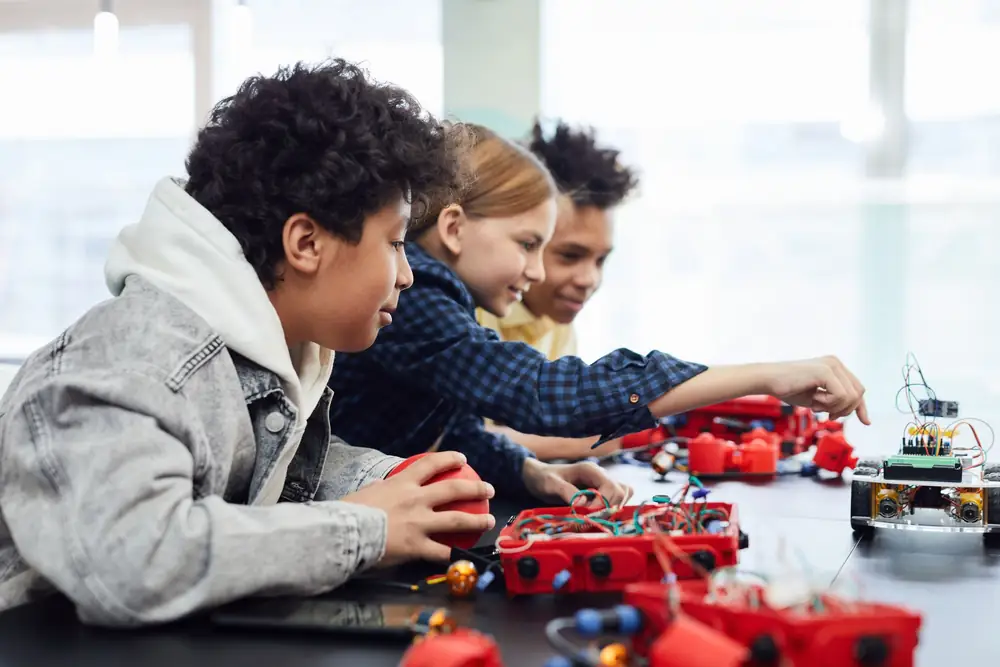
Children remember what they have tried. In a good school you usually see them building, measuring, drawing, asking and explaining, with a teacher close by who asks one more question.
- Short experiments with things children can hold
- Projects done in small groups
- English and Hindi words for the same ideas
- Time outside, looking closely at plants, water and weather
General guidance for parents, not a description of this school's method.
Ask about the people, not only the building
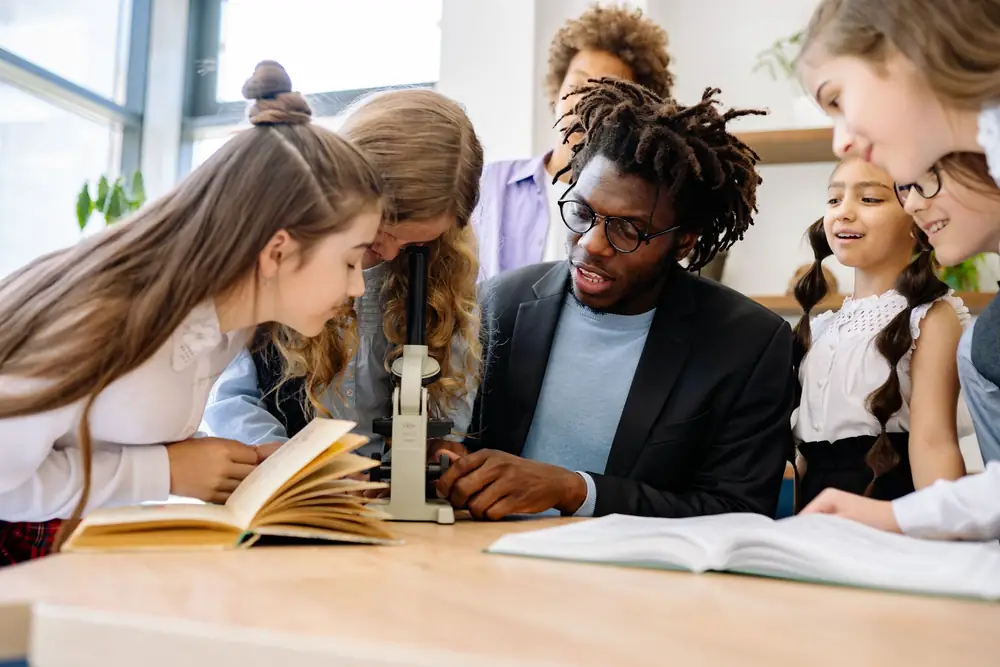
The best part of any school is the adult who knows your child's name. When you visit, ask who will teach your child, how long they have taught, and how they tell parents about progress.
Teachers and staff
Who teaches, and what the school wants parents to know about them.
To be filled in by the school